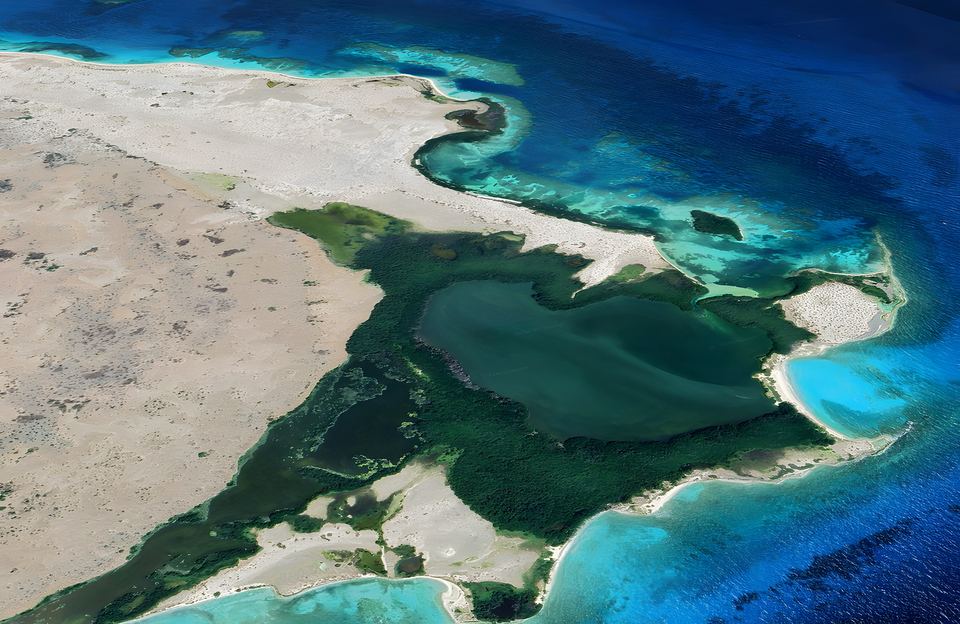
The pressures
- Fishing. Queen conch remains depleted despite its permanent closed season, and several fish species are caught before they mature.
- Infrastructure and beach use. The sandy ground and its grasslands would be the most affected by infrastructure and beach activities. Tourism development plans have existed for decades; in 2007 the National Assembly ordered works halted because of the risk to the ecosystem.
- Marine debris and ghost nets. Abandoned fishing nets trap and kill marine life; according to the FAO they make up about 10% of marine litter.
- Invasive species. The exotic soft coral Unomia stolonifera has spread through Mochima, Aragua and Falcón. Our sources do not report it at La Tortuga; it is worth watching for.
- Threatened wildlife. All the sea-turtle species that use the island are threatened.
Fundación La Tortuga
Fundación La Tortuga is a socio-environmental platform for eastern Venezuela and its coasts (Anzoátegui, Mochima, Sucre), with more than two decades of work combining scientific research, conservation and on-the-ground projects. Its published initiatives include removing marine debris (about 100 tonnes, by the foundation's count), campaigns on ghost nets, responding to sea-turtle hatchings and releasing hatchlings on Anzoátegui beaches, and the first paper (2015) to warn of the Unomia stolonifera invasion. One of its members took part in the 2011 La Tortuga shorebird study.
How to visit without leaving a trace
- Take all your rubbish back to the mainland, including cigarette butts and small plastics.
- Don't buy or eat queen conch, or lobster out of season or undersized.
- Anchor on sand, never on coral or seagrass.
- Don't use lights on the beach at night, and keep off turtle nesting areas.
- From August to December, when shorebirds arrive, keep your distance from the lagoons.
- Don't feed wildlife or take shells, coral or plants.